

-
WizKids Games To Release MAGE KNIGHT: RESURRECTION – HeroClix by Wizkids Games
Posted on February 12th, 2013 No commentsI’ll be watching this closely. Dungeon Crawlers has a long history of supporting Mage Knight. Just check our Mage Knight download section 🙂
WizKids Games To Release MAGE KNIGHT: RESURRECTION – HeroClix by Wizkids Games.
Hillside, New Jersey – February 11, 2013 – WizKids Games, a subsidiary of NECA, announced today plans to release an all-new fantasy miniatures product based upon the popular and long-lived world of MAGE KNIGHT. The first game to utilize the extremely versatile and innovative Combat Dial System game platform, MAGE KNIGHT boasts over a dozen releases, including an award-winning board game based on the property.
“MAGE KNIGHT is what started it all and we’re happy to return to the world WizKids Games created,” said Justin Ziran, president of WizKids Games. “MAGE KNIGHT is a beloved franchise, by both the fans and all of us here in the office. We’re committed to offering something that is compelling and respects MAGE KNIGHT’s long history.”
Planned for release in fall 2013, MAGE KNIGHT: RESURRECTION will be a full fantasy miniatures line utilizing the Combat Dial System game platform it pioneered. There will be 25 miniatures in the line, with content pulled from all corners of the MAGE KNIGHT universe. Each figure will incorporate SwitchClix technology, and include two dials one designed for the MAGE KNIGHT 2.0 rules, and a second HeroClix P.A.C.-compatible dial. MAGE KNIGHT: RESURRECTION will be offered in both full starter sets and collectible booster packs, two formats familiar to the collectible industry and fans of the collectible franchise.
ABOUT WIZKIDS/NECA, INC.
A wholly-owned subsidiary of the National Entertainment Collectibles Association Inc. (NECA), WizKids/NECA is a New Jersey-based game developer and publisher dedicated to creating games driven by imagination. Its HeroClix brand is the most successful collectible miniatures games on the market today, with over 250 million miniature game figures sold worldwide. For additional information, visit www.wizkidsgames.com
CONTACT (NECA and Wizkids):
Leo Saraceni
leos@necaonline.com
908-686-3300 xt 230 -
Dungeon Crawler Miniatures (DCMs) Kickstarter TIDAL WAVE Redeux.
Posted on November 2nd, 2012 No commentsOur friends at Dungeon Crawler (no relation) are running a Kickstarter Campaign.
I recommend that you check it out:
http://www.kickstarter.com/projects/dungeoncrawler/dungeon-crawler-minis-dcm-tidal-wave-redeuxFrom their website:

We are offering a Set of 8 nautically themed miniatures entitled “TIDAL WAVE”. These miniatures are available as SINGLES unpainted or pre-painted. We even have limited prints of Alternate paint schemes as Rewards for this campaign.
Recap
-
Instantmold
Posted on January 30th, 2011 No commentsThis stuff looks cool:
httpv://www.youtube.com/watch?v=ub70AU5RfmI
I’ll have to order some to try out.
-
Ebbles Miniatures: Convoy
Posted on September 17th, 2010 No comments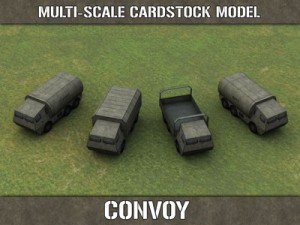
Simple and quick-building convoy set. Includes 4 different truck types in 4 different color schemes. Available in 1:100 and 1:60 scale for use with 15mm and 28mm sized figures.
This model is also machine-cuttable.
Colors include: Helo, Tan, Grey and White
Truck Types: Closed Loaded Bed, Open Loaded Bed, Fuel Servicing Truck, and Water Tanker
Price: $6.00
Available in two scales 1:60 and 1:100
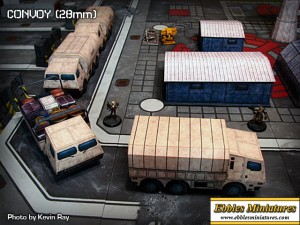
Ebbles Miniatures latest release, Convoy, is a wonderful addition for war gamers and role players alike. These will add new elements and strategies to your games!
-
Custom White Balance (huh?)
Posted on June 15th, 2009 No commentsLet’s continue our discussion of some basic photography concepts. Since the miniatures hobby is so visual, and since my website is so image heavy, I figure it’s somewhat pertinent.
You’ve all probably seen pictures on various websites and forums, where images have heavy yellow or orange tints. That, my friend, is usually the result of using incorrect white balance value.
What is white balance? Here’s the explanation from Wikipedia:
… color balance (sometimes gray balance, neutral balance, or white balance) refers to the adjustment of the relative amounts of red, green, and blue primary colors in an image such that neutral colors are reproduced correctly.
Let’s think this through. All sources of light have different color temperatures, measured in kelvin. I won’t go into the theoretical explanation of color temperatures, of which I myself only have a tenuous understanding. Suffice it to say that different types of light sources — the sun, a fluorescent light bulb, halogen light, tungsten light, etc. — all give off different color temperature. Our brain can “interpret” the different sources on the fly without us being aware of it and render the colors correctly regardless of the source. So a red ball has the same color whether we look at it in the sun or indoors or under a light bulb. Read the rest of this entry »
-
Mechwarrior Repair Bay: Disfiguration
Posted on May 26th, 2009 No commentsIn this basic tutorial I will show you step by step how to fix your mechwarrior miniatures that may have slight disfiguration due to bent limbs and other extremities. In this tutorial I will show you an example by using my vulture with a defective arm. The arm will not rotate due to the fact it is bent.
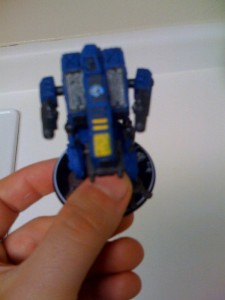
Disfigured arm
First remove the dial from the miniatures base. This is important as it will keep your dial from becoming damaged by later steps.
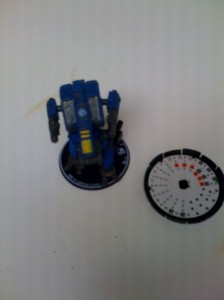
Remove the Dial
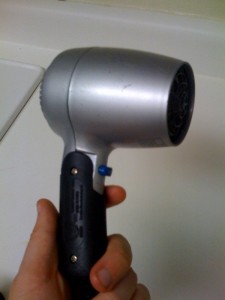
Select your hair dryer
Grab a hair dryer. Any hair dryer with variable speeds will work. Set your blow dryer to high. This is important as timing is key with this procedure. The plastic needs to be heated at a fast rate.
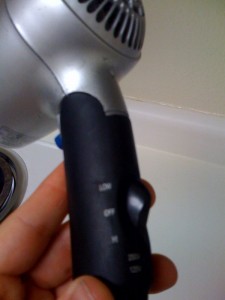
Place the setting on High
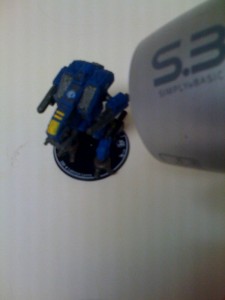
Be carefull not to over heat the mech!
Aim the dryer while on high heat to the specific area that needs adjustment. It is highly recommended that you heat the part for 5 to 10 seconds. If your miniature is a little thicker you can heat for a few seconds longer but do not exceed 15 seconds. It is also recommended that you rotate your miniature as to focus the heat on the specific part you are adjusting. The heat will loosen the plastic allowing it to bend easily
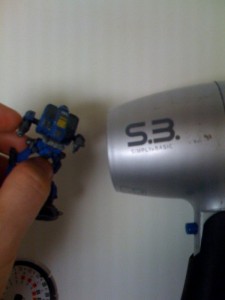
Rotate the Mech slowly
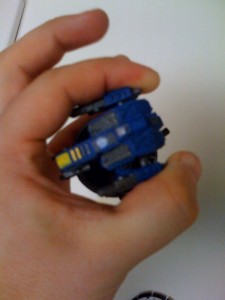
Hold the disfigured part
When you have reached the apropriate heating time quickly turn off your blow dryer and position the piece you heated where you would like it. It is important to be very careful as it will bend very easily. While holding your thumb over your heat dial and keeping your hand on the disired position of the part you are fixing, quickly run the miniature under cold running water. When the cold water meets the warm plastic it will cause it to instantly cool and shock the plastic to stay in the position that you are holding it in.
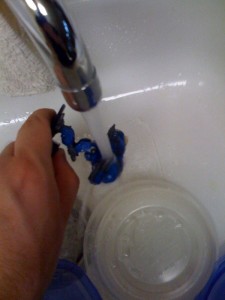
Coolant Flush!
Pat or air dry and reattatch the dial. You now have successfuly fixed a disfigured mechwarrior miniature. On a side note it is imporant to cover the heat dial as there is no lamination of the sticker and your heat dial could face water damage if not protected. 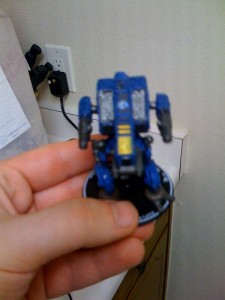
Fully repaired!
I would like to thank my good friend Zecks for taking the time to write up this article and for taking the pictures to help explain the entire process. If you would like to see more photos on this Mechwarrior Repair Bay article please check the forums HERE
-
Painting Space Marines
Posted on May 20th, 2007 No commentsDetailed Description of one way to paint a Space Marine Vetran Squad.
I decided that I would use the GW Veteran Squad, and work it out from there using the same color scheme I use for all my Marines.
Now bear in mind, most of those colors are for the small details.
Now onto the how to…
-
Painting Orks (Orcs)
Posted on May 20th, 2007 No commentsA simple question asked on our message board (what colour is an Ork?) lead to a group effort on describing how they each painted thier respective Orks.
Of course, no guide would be complete without referring to the Games Workshop “Getting Started guide to painting Orks“.
-
Introduction To Hobby Metal Casting.
Posted on November 12th, 2005 No commentsby Col Croucher.
If youre a practical type of person who enjoys a challenge, then you would definitely enjoy the personal rewards & satisfaction gained from the art of hobby metal casting.
Your enjoyment will start right from the moment you start to build the simple equipment required. It is possible to create amazing things in metal with a home hobby foundry. With an understanding of basic foundry knowledge, and simple home built equipment is the key to your hobby metal casting success.
Model engineers, home mechanics, car & motorbike restorers would be amazed at the speed at which new replacement parts can be made. With the right kind of knowledge, many hard to get parts can be made right in your own home foundry…for next to nothing.
Read the rest of this entry » -
Miniature basing tip
Posted on December 27th, 2003 No commentsThousands of you have written me, begging the question, "How did you make such a great base for your Golden Demon winning Elf??" When I woke up from my fruit-cake fueled nap, I quicked composed myself and wrote this little article:
